


When people think about Singapore’s rise, they talk about policy, trade, and technology. Few notice the invisible design that weaves through the city — a quiet choreography between nature, structure, and spirit. Beneath the skyline of glass and steel lies something older than the nation itself: Feng Shui.
The City That Breathes Intention
Singapore may be a modern financial hub, but its foundations are guided by metaphysical precision. From the curve of Marina Bay to the placement of the Esplanade domes, the city isn’t merely built — it’s balanced. This wasn’t accidental. Lee Kuan Yew himself consulted geomancers in the early years of nation-building, seeking alignment between landform, water flow, and prosperity.
The result? A city that feels unusually alive. The downtown core faces the sea — a channel of Qi, or life energy — while the surrounding hills cradle it like a vessel. Even the flow of expressways, green corridors, and reservoirs mimics the body’s meridians, ensuring movement without chaos.
In Feng Shui terms, Singapore’s planners designed more than efficiency — they designed continuity.
Buildings That Speak the Language of Energy
Step into corporate Singapore, and you’ll notice how deeply Feng Shui seeps into everyday business. Banks orient entrances toward the most auspicious directions. Developers carve openings in skyscrapers — not for aesthetics, but to let the dragon’s Qi flow through.
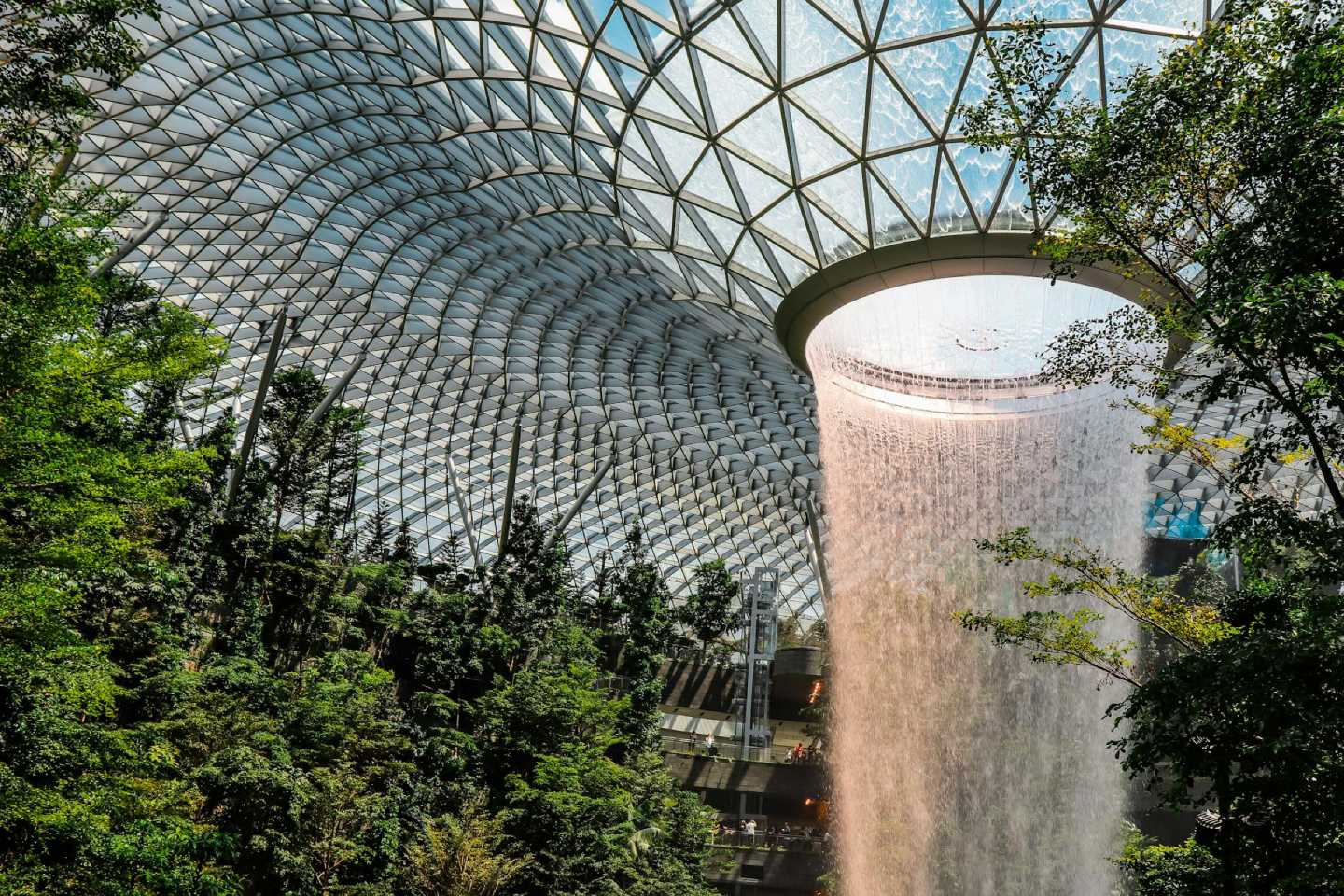
Changi Airport’s Jewel, with its circular design and the world’s tallest indoor waterfall, acts like a massive Qi vortex: water (wealth) descending into a calm center. It’s modernity built in dialogue with ancient wisdom.
For leaders, this reveals a simple truth: every environment either fuels or drains energy. Great companies — and great cities — cultivate the former.
Feng Shui as Leadership Design
Western leaders often ask, Is Feng Shui real?
The more useful question is: Does it work as a design principle for harmony and flow?
Singapore proves it can. In leadership terms, Feng Shui is less about superstition and more about systems thinking. It’s about recognizing interdependence — between people and place, profit and purpose, structure and soul.
Feng Shui, in this sense, becomes an executive tool: a lens to design organizations where energy — not just productivity — circulates.
Designing for Flow, Not Control
Modern executives are trained to optimize; ancient masters were trained to harmonize. The tension between these mindsets defines much of today’s corporate design challenge.
Singapore’s genius lies in merging both. The city’s infrastructure runs with machine-like precision, yet its form honors invisible rhythms — wind, water, sun, and slope. CEOs can learn from this balance: build systems that perform, but never forget to let the human energy breathe.
A workspace, like a city, is not just a container. It’s a living organism. Its corridors channel trust, its lighting feeds vitality, its orientation affects decisions. When energy flows well, results follow.
The New Mandate for Leaders
In an era of burnout and disconnection, Feng Shui’s relevance isn’t mystical — it’s managerial. Leaders who design for Qi design for sustainability. They cultivate workplaces where people feel aligned, not drained.
So perhaps the next time you walk through Singapore’s streets — or your own office — pause and sense what you cannot see. The hum of equilibrium beneath the efficiency. The conversation between stone and spirit.
In that quiet order, you’ll find a clue to why this city — and the companies that mirror its principles — keep thriving.
Feng Shui, at its core, is not about luck. It’s about alignment. And alignment, in leadership and in life, is the highest form of design.